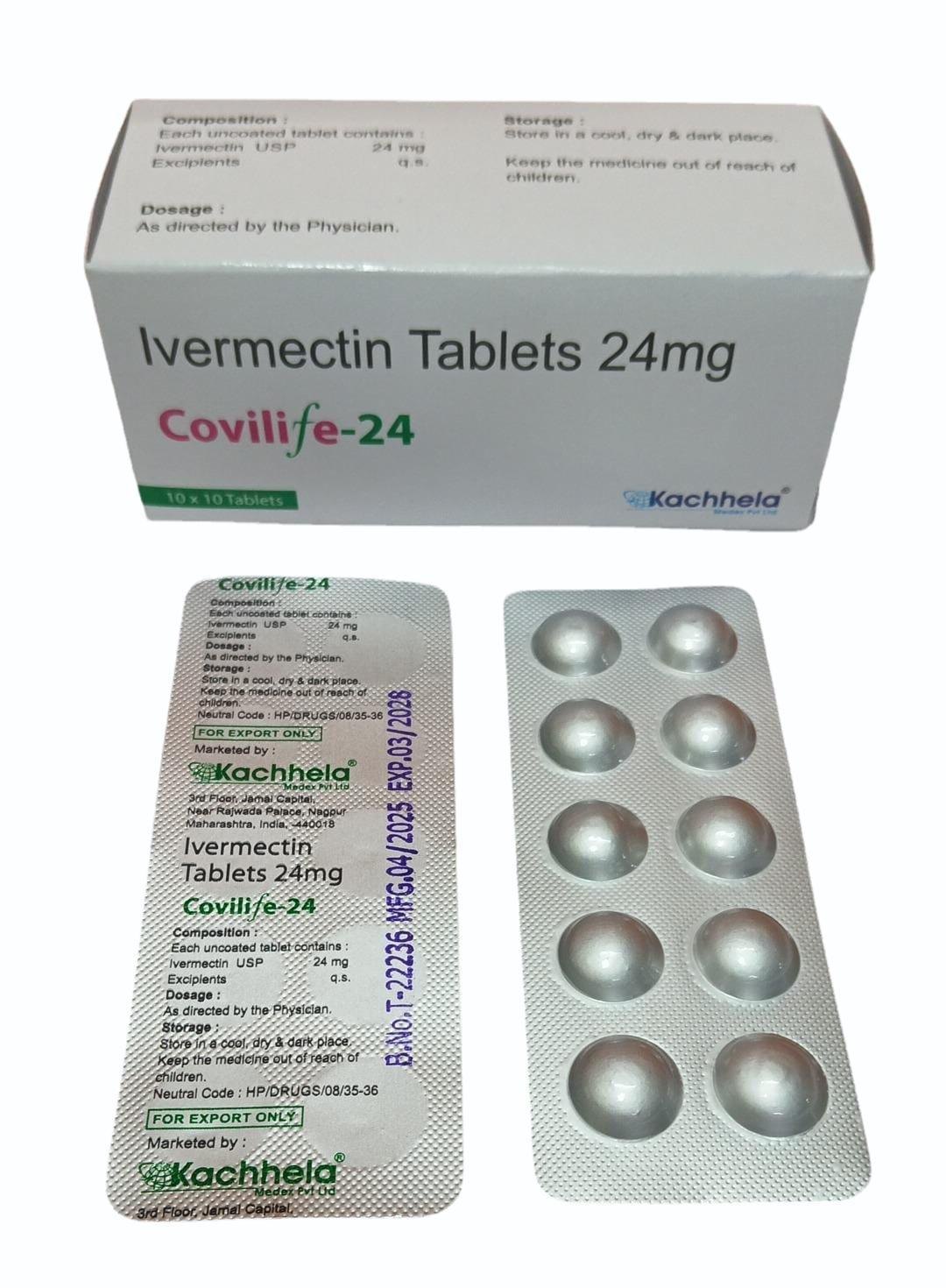
| Generic Name: | Ivermectin 24Mg |
| indication: | Antiparasitic Medication |
| Manufacturer Name: | Kachhela |
| Form: | Tablet |
| Strength: | 24MG |
| Packaging: | 10 Tablet In 1 Strip |
| Delivery-time: | 6 To 15 days |
Doctors Speak Out : The Truth About Ivermectin 24mg for Human Use
Medical Overview of Ivermectin 24mg
Ivermectin 24mg is a medication taken orally to treat human parasite infestations. Mainly available in 3 mg or 6 mg tablets, a 24 mg dose indicates taking several pills, primarily for those weighing more (for example, about 200 mcg per kilogram for someone around 120 kg).
Since it effectively combats nematode (worm) infections such onchocerciasis (river blindness) and strongyloidiasis, Ivermectin, which was discovered in the 1970s, has been listed on the World Health Organization’s (WHO) List of Essential Medicines.
The medicine paralyzes and kills the parasite by attaching itself to glutamate-gated chloride channels in its nervous system.
Over 4 billion doses of ivermectin have been administered globally since 1987. It is thought to be safe with few and moderate adverse effects when taken as directed by a physician.
Despite being widely used off-label during the COVID-19 pandemic, Ivermectin is not licensed for viral infections, and studies have not shown any evidence that it helps with COVID-19 or other viral illnesses. Most types of Ivermectin are only available with a prescription as of 2025, while generic equivalents are generally accessible and reasonably priced.
Hence, before taking Ivermectin, always get medical advice to make sure it is taken correctly and safely.
Efficacy Against Parasites and Viral Infections
Ivermectin is highly effective against parasite infections in humans, particularly worms such as Strongyloides stercoralis and Onchocerca volvulus, which causes river blindness. In 90–100% of cases, these parasites can be eradicated with a single treatment.
It is also crucial to international health initiatives aimed at preventing the spread of diseases like scabies and lymphatic filariasis and easing their symptoms in afflicted populations.
According to certain laboratory studies, Ivermectin can suppress RNA viruses, such as SARS-CoV-2, by preventing viral replication and cell entrance.
Ivermectin did not, however, considerably lower COVID-19 mortality, hospitalizations, or viral load in humans, according to 2025 assessments of phase III clinical studies. Overall, it is ineffectual as a treatment for viral disorders, notwithstanding the possibility of mild symptom relief.
Ivermectin Safety and Side Effects
Ivermectin is considered very safe for humans, with billions of doses given worldwide and few serious side effects.
Common mild side effects may include:
- Itching
- Dizziness
- Nausea or vomiting
- Diarrhea
- Fatigue
These usually go away quickly on their own.
Serious side effects, such as disorientation or seizures, are uncommon and mostly happen to patients with Loa loa infections or when very large dosages of the medication are used.
After the first trimester of pregnancy, Ivermectin is usually safe, and patients with liver issues don’t need to change their dosage. High dosages taken for unauthorized purposes might become toxic and result in issues including edema and a rapid heartbeat.
Ivermectin is generally safe and well-tolerated when taken as directed for authorized conditions.
Dosage Guidelines and Best Practices
Human ivermectin dosages are determined by body weight and are typically 150–200 mcg per kilogram as a single oral dose taken without food.
- A person weighing 120–160 kg, for instance, would take roughly 24 mg, which might be divided into several Ivermectin 3mg or Ivermectin 6mg pills.
- The above dosage may be repeated every 6-12 months for onchocerciasis, also known as river blindness.
- Treatment for scabies may involve 2-5 doses spread out over a few weeks.
Among the best practices are:
- Use only with a prescription.
- Examinations of the eyes or stool to verify the parasites have disappeared.
- Prior to therapy, take a test for Loa loa in regions where the parasite is prevalent.
- Not advised for pregnant women in the first trimester or youngsters under 15 kg.
- Keep an eye out for drug interactions.
Debunking Myths and Misinformation
- Myth: COVID-19 is cured by Ivermectin.
Fact: There has been no decrease in fatalities, hospitalizations, or serious illnesses, according to many clinical studies and 2025 reviews. Only slight symptom alleviation is reported in few trials.
- Myth: Ivermectin is a secret treatment for cancer.
Fact: Although there have been laboratory research, no human trials have demonstrated that it prevents cancer. Online claims are false information that can encourage risky self-use.
- Myth: Like horse paste, Ivermectin is harmless.
Fact: The formulation of human medications varies. Ingesting veterinary versions can result in toxicity.
Experts suggests: Adhere to evidence-based recommendations from medical professionals and only use Ivermectin for authorized purposes.
Doctors’ Perspectives and Recommendations
Ivermectin is regarded by medical professionals as a very safe and effective medication for treating human parasite infections. Nevertheless, they highly advise against utilizing it for unauthorized purposes.
- Oncologists deny that Ivermectin may cure cancer since there are no randomized clinical studies (RCTs) to back this up.
- While lab studies indicate antiviral effects, infectious disease experts affirm it has no demonstrated value for COVID-19.
- Specialists also draw attention to the dangers of abuse, which can result in major health issues.
Suggestions:
- Use Ivermectin only for authorized parasitic illnesses.
- Avoid self-medication.
- Use evidence-based therapies and vaccinations to treat viral infections.
The possibility of safely repurposing Ivermectin or comparable medications in the future requires more investigation.
FAQS?
What is Ivermectin 24mg used for in humans?
The FDA has approved Ivermectin 24 mg (150–200 mcg/kg for adults weighing 120–160 kg) to treat intestinal strongyloidiasis, river blindness (onchocerciasis), and other worm diseases such as hookworm or whipworm.
Is Ivermectin 24mg safe for human consumption?
Yes, Ivermectin is safe for human usage when taken as prescribed for recognized parasite illnesses. Overdosing or using it for unapproved uses might result in serious adverse effects such nausea, low blood pressure, or neurological disorders.
Can Ivermectin 24mg prevent or treat COVID-19?
No, the FDA has neither authorized nor licensed Ivermectin for the prevention or treatment of COVID-19, and new research and guidelines from 2025 indicate that it has no appreciable advantages in lowering human mortality, hospitalization, or viral load.
What do doctors say about using Ivermectin 24mg without a prescription?
Even in states where over-the-counter (OTC) access is permitted, doctors strongly advise against using Ivermectin without a prescription, cautioning that it can cause major issues if used for the wrong reasons or in the improper doses.
Are there alternatives to Ivermectin 24mg for humans?
Yes, depending on the particular infection, other alternatives of Ivermectin 24 mg for treating parasitic infections include praziquantel, mebendazole, pyrantel pamoate, moxidectin, albendazole, and permethrin (for external parasites).
Other Medicine:- Ziverdo Kit | Azipro 250mg | Azipro 500mg | HCQS 200mg | HCQS 400mg | ivermectin 24mg |